
“Everything can be taken from a man but one thing: the last of the human freedoms—to choose one’s attitude in any given set of circumstances, to choose one’s own way.” ― Viktor E. Frankl, Man’s Search for Meaning
By Kenneth Ukoh: March 15, 2026
When events occur in our lives, especially adverse events, it’s part of human nature to examine them to make sense of them. The way people deal with such circumstances, particularly the difficult ones, is known in psychology as “meaning-making“. It is defined as “the process by which people interpret situations, events, objects, or discourses, in the light of their previous knowledge and experience”(Zittoun and Brinkmann, 2012).
Meaning-making is recognised as a complex, dynamic, and continuous process that functions as both a cognitive and emotional mechanism, particularly when individuals are coping with adversity, trauma, or significant life transitions. It involves moving beyond just “what happened” to constructing a coherent narrative that provides purpose and fosters resilience.
The Cognitive Process (Making Sense)
Meaning-making is an active, iterative cognitive process that involves interpreting, integrating, and reframing information, often using unconscious, intuitive, and conscious inferences (Krch, 2011). This psychological mechanism helps individuals reconcile new experiences with their global beliefs (schema) through assimilation or accommodation, particularly following stress. The process involves the following:
- Cognitive Appraisal. People actively assess, reframe, and reinterpret events to make them more comprehensible, often moving from seeing a situation as threatening to understanding it as challenging or manageable.
- Reconstructing Beliefs. This involves changing one’s understanding of the world or personal goals (accommodation) or fitting new, difficult information into existing frameworks (assimilation).
- Mental Time Travel. Individuals use memory to connect past experiences with future expectations, enabling them to construct a coherent narrative that provides a sense of purpose.
- Information Processing. Meaning-making involves the cognitive processing of information, including conscious, deliberate reasoning and unconscious, automatic, or intuitive cognitive processes.
The Emotional Process (Emotional Resolution)
Emotional processing refers to how individuals process stressful life events and is defined as “…..“a process whereby emotional disturbances are absorbed, and decline to the extent that other experiences and behaviour can proceed without disruption” (Emotional Processing, n.d.). The emotional processes involved are:
- Regulating Distress. Meaning-making is crucial for coping with, reducing, and managing negative emotions like anxiety, anger, and fear following, for example, traumatic events.
- Emotional Signatures. Experiences are often processed alongside emotional signatures, which help shape perceptions of comfort or discomfort, guiding intuitive, or “fast,” meaning-making. An emotional signature refers to an individual’s unique, predictable pattern of reacting to situations and expressing emotions—a personal, often subconscious, “style” of relating to the world. It combines thoughts, feelings, behaviours, and, in leadership, an “affective presence” that influences how others feel
- Finding Significance. It enables individuals to move from a state of shock or despair to a state of emotional resolution or, in some cases, post-traumatic growth. Finding significance in life events involves a blend of detecting existing meaning in daily life and actively constructing meaning from challenging experiences. Research suggests that, rather than searching for profound, rare moments, most people realise that life is meaningful through connection, purpose, and coherence. When life is chaotic, particularly after negative events (trauma, loss), individuals can construct meaning by finding a “silver lining,” learning, or gaining insight.
Interdependence of Processes
Meaning-making requires the simultaneous, iterative, and reciprocal interaction of both cognitive and emotional systems. Cognitive efforts to understand a situation affect emotional states, while emotional experiences, in turn, drive the need for cognitive restructuring. This is often manifested through “narrative meaning making,” which integrates causal explanations (cognitive) with feelings (emotional).
Theoretical Frameworks
Meaning-making theoretical frameworks describe how individuals interpret, understand, and derive significance from life experiences, particularly stressful or traumatic events. Key models include Park’s Meaning-Making Model (reconciling global and situational meaning), narrative approaches, and Life-Crafting, which focus on creating purpose and restoring psychological harmony.
The main theoretical frameworks are:
- Park’s Meaning-Making Model. This is the prominent framework. It distinguishes between global meaning (one’s fundamental beliefs, goals, and assumptions about the world) and situational meaning (the appraisal of a specific, often traumatic, event). The process involves reconciling the specific, often harsh “situational” circumstances (e.g., job loss, illness) with one’s “global” meaning system (fundamental beliefs and goals). When an event shatters global meaning, it creates a discrepancy, leading to distress. Meaning-making efforts are the processes (e.g., searching for meaning, reappraisal) that bridge this gap. The Outcomeor goal is to reach “meaning made”—a new, updated, and integrated understanding of the event.
- Constructivist/Narrative Approaches. This approach suggests that people construct meaning by organising their experiences into stories or narratives. This helps individuals integrate negative events into their personal life story, fostering coherence and identity.
- Cognitive-Existential Frameworks. These focus on how people manage the disruption of basic assumptions (e.g., “the world is safe,” “I am in control”) following traumatic events.
- Life-Crafting/Proactive Meaning-Making. This perspective emphasises intentional, proactive efforts to cultivate meaning in everyday life and work, rather than responding to crises. It includes crafting, or changing, the physical, social, and cognitive aspects of one’s environment to align with personal values.
- Social/Distributed Cognition. This view posits that meaning is not just internal, but is created through social interactions, cultural contexts, and tools.
Viktor Frankl’s Logotherapy.
Viktor Frankl was an Austrian psychiatrist and Holocaust survivor who founded logotherapy, a form of therapy based on existential analysis, asserting that the primary human drive is the pursuit of meaning, not pleasure. He argued that individuals can find meaning in any situation, even or especially in sufferin by taking responsibility, embracing love, or finding purpose in work and creativity.
Finding Meaning through The Triangle of Meaning

Figure 1 – The Triangle of Meaning – Source: Viktor Frankl Institute of Logotherapy
Logotherapy holds the view that three ways to find meaning is through attitude, experience and creativity.
Attitude
Attitude is a learned, enduring predisposition to perceive, evaluate, and respond to life’s events, people, and challenges in a certain way. It shapes one’s outlook, combining beliefs, emotions, and behaviours into a consistent, often “positive” or “negative” approach to the world, accepting what cannot be changed and being positive about what can be changed. What attitudinal values have I realised by taking a stance toward a situation or circumstance that was courageous or self-transcending?
Experience
Life experience is the unique, accumulated knowledge, skills, emotions, and memories gained through living. These are often profound moments, ranging from personal relationships and career milestones to travel and overcoming adversity, which shape an individual’s perspective and foster personal growth, providing a distinct form of wisdom that is developed over time. It involves the experiences one has gained from relationships with others, from nature, culture or religion that were deeply meaningful or not.
Creativity
Creativity is vital in everyday life because it enhances mental well-being, fosters innovative problem-solving, and adds meaning to daily routines. It reduces stress, boosts positive emotions, and builds resilience by helping individuals adapt to challenges and view the world from new perspectives. A creative mindset fosters curiosity and openness, making it easier to change and step into the unknown. It boosts brain plasticity, supports long-term brain health, and can even increase one’s lifespan
Main Aspects of Viktor Frankl’s Philosophy:
- Logotherapy. Known as the “Third Viennese School of Psychotherapy” (after Freud and Adler). This approach is future-oriented and meaning-centred because it regards “will to meaning” as the primary human drive, even in adversity. Viktor Frankl’s logotherapy is an existential, “height-oriented” psychotherapy focused on finding personal meaning (logos) as the primary human motivation. Developed by the psychiatrist and Holocaust survivor, it emphasises that humans can endure any suffering by finding purpose, fostering resilience through freedom of will, responsibility, and intentional living
- The Will to Meaning. Frankl believed that the search for meaning is the primary motivation in human life. In the absence of this meaning, a “vacuum” is filled by boredom, apathy, aggression, or addiction.
- Meaning in Suffering. Frankl believed that suffering is inevitable, but how we respond to it is a choice. Suffering ceases to be suffering the moment it finds meaning, such as the meaning of a sacrifice.
- The Last Human Freedom. Frankl argued that, irrespective of the circumstances, even in a concentration camp, an individual always retains the freedom to choose their attitude. He famously wrote: “Between stimulus and response there is a space. In that space is our power to choose our response. In our response lies our growth and our freedom”.
- Sources of Meaning. He identified three main ways to discover meaning in life:
- By creating a work or doing a deed (creativity, purpose).
- By experiencing something or encountering someone (connecting with nature, art, or love for another person).
- By the attitude we take toward unavoidable suffering (courage, dignity).
- Man’s Search for Meaning. His 1946 book, based on his experiences in Nazi concentration camps, sold over 18 million copies, offering a profound look at finding purpose amidst extreme desolation.
Frankl’s work emphasises that life has meaning under any circumstances, and it is up to the individual to discover it.
Viktor Frankl’s Logotherapy (Viktor Frankl Institute of Logotherapy, n.d.) argues that life has meaning under all circumstances, even the most miserable, and that humans are driven to find meaning. The Constructivist approaches emphasise that individuals construct their own reality and meaning through interpretation, whereas Positive Psychology focuses on human flourishing by optimising functioning through value-congruent, goal-oriented actions.
Positive Psychology and Meaning
Positive psychology, as known today, was developed by Dr Martin Seligman, who served as director of the Penn Positive Psychology Centre at the University of Pennsylvania and Zellerbach Family Foundation Professor of psychology at the university. He was the President of the American Psychological Association (APA).
Positive psychology is the scientific study of human flourishing, focusing on strengths, resilience, and well-being rather than just dysfunction. It emphasises cultivating positive emotions, engagement, relationships, and, critically, meaning—living for a purpose larger than oneself. Meaning is a key pillar for lasting happiness, acting as a buffer against life’s challenges.
Positive psychology is the scientific study of human flourishing, focusing on strengths, resilience, and well-being rather than just dysfunction. It emphasises cultivating positive emotions, engagement, relationships, and, critically, meaningful living for a purpose larger than oneself. Meaning is a key pillar for lasting happiness, acting as a buffer against life’s challenges.
Main Aspects of Meaning in Positive Psychology
- Definition. Meaning is associated with understanding life’s purpose and belonging to something bigger.
- PERMA Model. “Meaning” is the ‘M’ in the PERMA model, which represents five core elements of well-being (Positive Emotion, Engagement, Relationships, Meaning, Accomplishment).
- Building Meaning. It is cultivated by identifying signature character strengths (e.g., courage, wisdom) and applying them to altruistic goals.
- Three Levels. Meaning is developed at the subjective level (personal fulfilment), individual level (character virtues), and group level (community, altruism).
Benefits
- Lasting Fulfilment. Shifting from fleeting pleasure to deep satisfaction and contentment.
- Resilience. Higher levels of well-being and faster recovery from setbacks.
- Health. Improved mental and, in some cases, physical health
Applications of Meaning-Making
Meaning-making practices are cognitive, emotional, and social processes used to interpret life events, particularly in times of adversity, to restore a sense of order, purpose, and coherence. These practices are applied across various fields to foster resilience, facilitate healing, and enhance learning.
Therapeutic and Clinical Interventions
- Bereavement and Grief Counselling. Helping individuals process loss by finding new meaning in their lives, often through narratives about the deceased or turning to spirituality.
- Trauma Recovery. Assisting survivors of traumatic events (e.g., natural disasters, violence, terrorism) in integrating the experience into their lives to reduce PTSD symptoms.
- Chronic Illness Management. Utilising techniques like Meaning-Centred Psychotherapy to help patients with cancer or chronic pain find purpose despite physical limitations.
- Expressive Writing. Using structured writing interventions to process distressing events, which has been shown to increase cognitive processing and improve physical/psychological health.
- Posttraumatic Growth. Actively searching for positive outcomes or “silver linings” in negative experiences, such as enhanced relationships, improved coping skills, or personal growth.
Education and Learning
- Active Learning in Classrooms. Engaging students in creating, rather than passively receiving, knowledge through analogies, comparisons, and creating concept maps.
- Reflective Practice. Promoting deeper understanding by having students connect new information with existing knowledge frameworks.
- Multimodal Representation. Using various media (e.g., videos, digital projects, imagery) to allow learners to construct and demonstrate their understanding.
- Collaborative Learning. Using techniques such as reciprocal teaching, in which students assume roles (summarizer, questioner) to deepen collective understanding.
Personal Development and Coping
- Narrative Identity Construction. Individuals reconstruct their life stories to create a sense of continuity, explaining who they were, are, and want to become.
- Positive Reappraisal. A strategy to manage stress by focusing on positive aspects or finding beneficial outcomes in difficult situations.
- Self-Event Connections. Linking specific life events to one’s self-concept helps in maintaining stability during life changes.
Organisational and Social Contexts
- Organisational Change Management. Employees use meaning-making to adapt more effectively to change, thereby improving performance and work engagement.
- Community and Social Action. Utilising shared experiences or collective, artistic, or philanthropic endeavours (e.g., establishing foundations after a loss) to build community and purpose.
- Reflective Practice in Professions. Used by professionals (e.g., teachers, social workers) to understand their role and identities, often through group discussion and shared narratives.
Meaning-making is not always positive; it can lead to unhealthy rumination if not managed properly. However, when successful, it generally leads to improved mental health and better adjustment to challenging situations.
Strategies for Finding Meaning in Circumstances

- Positive Reappraisal. Actively searching for positive aspects, growth opportunities, or lessons in a difficult situation.
- Purposeful Goal Setting (Life Crafting). Setting goals aligned with personal values helps create direction and acts as a buffer against anxiety.
- Nostalgia and Reflection. Looking back at past experiences to find a thread of continuity and strength.
- Self-Transcendence. Connecting to something bigger than oneself, such as helping others, engaging in spiritual practices, or experiencing nature/art.
- Narrative Construction: Writing about traumatic events or reflecting on one’s life story can help transform pain into a narrative of growth.
- Valued Relationships. Investing in deep, authentic connections with family, friends, or community.
Ultimately, meaning is often found in the “weaving” of two threads: the circumstances themselves (the hand you are dealt) and the choices you make in response to those circumstances
The Meaning-Making Model
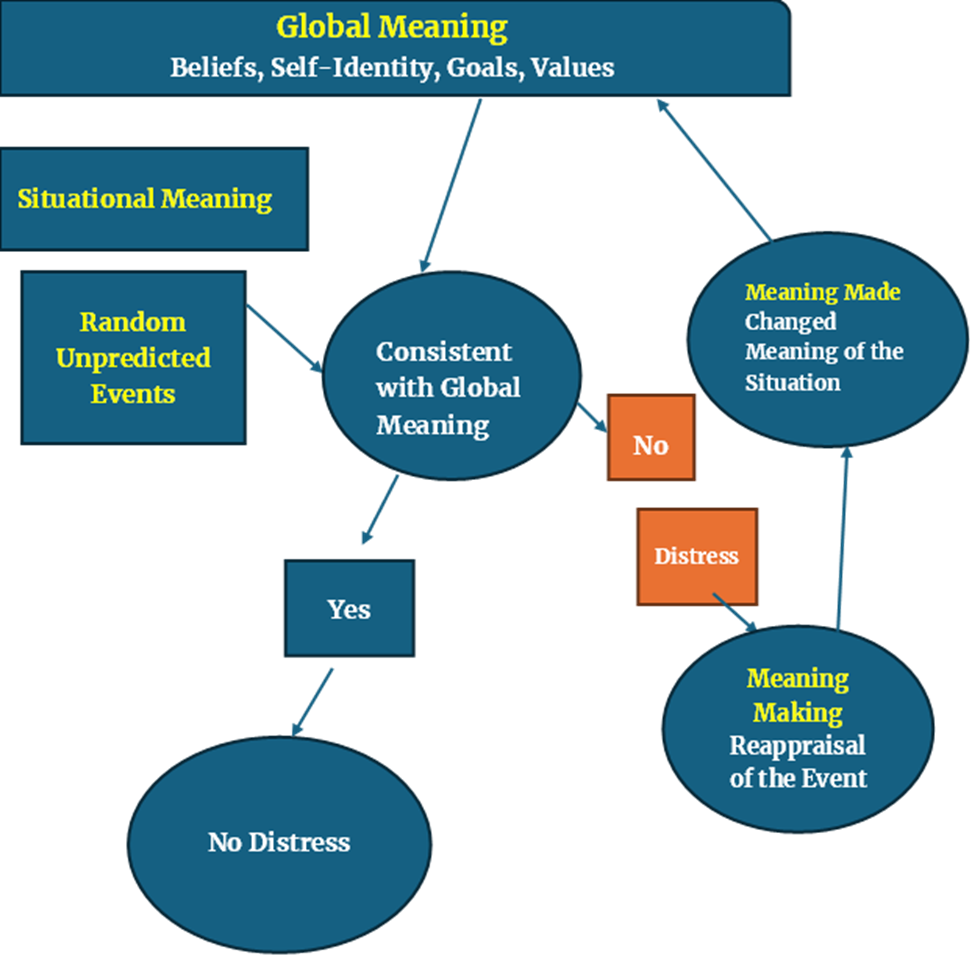
Figure 1 – The Meaning-Making Model. Source: Adapted from Crystal L. Park’s Meaning Making Model
The Meaning Making Model is a psychological framework developed by Crystal Park. PhD, a Professor of Psychology at the University of Connecticut. It represents how people manage distress from traumatic or life-altering events and posits that individuals try to reduce the discrepancy between their “global meaning” (core beliefs/goals) and the “situational meaning” of a crisis (Park, 2010).
The meaning-making model provides a comprehensive framework for understanding how meaning is the essence of human functioning in everyday life, but is particularly relevant in the context of traumatic events. This model can be a helpful way to work with clients who have experienced trauma.
The meaning-making model posits that highly stressful life events threaten individuals’ global meaning, including their global beliefs, goals and sense of meaning or purpose in life (Janoff-Bulman 1989; Park et al. 2012). When individuals appraise these events (situational meaning) as discrepant with their global meaning, they experience distress (George and Park under review). To reduce distress and facilitate adjustment, individuals attempt to resolve this discrepancy, called meaning-making (Park 2010; Park and Folkman 1997). Perhaps the most central assertion of the meaning-making model is that meaning-making reduces distress. That is, meaning-making at one time point will predict better subsequent adjustment. A second key tenet of this model is that meaning-making reduces discrepancies between appraised and global meaning. Perceived violations of one’s global beliefs and goals are expected to diminish over time, predicted by previous engagement in meaning-making. A third key tenet is that meaning-making should lead to adjustment only to the extent that meaning is made regarding the stressor. This sense of meaning reflects the person’s appraisal of having completed processing (Park and Folkman 1997).
Other Models of Meaning
- Meaning Maintenance Model (MMM). Proposes that people have a fundamental need for meaning and will engage in “fluid compensation”—reaffirming alternative beliefs—if their sense of coherence is threatened.
- Triangle of Meaning. A communication model demonstrating the indirect relationship between a symbol (word), a thought (reference), and a referent (object).
This framework is widely used to understand coping mechanisms following events like bereavement, serious illness, and natural disasters.
Strategies for Making Meaning Out of Life’s Circumstances
Here are the key approaches to making meaning out of life’s circumstances, based on psychological research:
Adopt a “Meaning Mindset” (Viktor Frankl’s Approach)
Developed by psychiatrist and Holocaust survivor Viktor Frankl, logotherapy posits that humans are driven by a “will to meaning”.
- Attitudinal Values. When faced with unchangeable, painful circumstances, you can find meaning by choosing your attitude toward that fate.
- Suffering as Redemptive. While suffering itself is not good, it can be transformed into a personal triumph or a “deed” by bearing it with dignity, courage, and unselfishness.
- The “Why”. As Nietzsche noted, “He who has a why to live for can bear almost any how”.
Narrative Reconstruction (Reframing Your Story)
Making sense of, or “meaning making”, involves changing how you understand events to fit with your overall life story.
- Active Processing. Rather than avoiding painful memories, processing them reduces their intensity and integrates them into your identity.
- Post-Traumatic Growth. Meaning-making after a crisis is often associated with finding positive benefits or personal growth, such as increased resilience or strengthened relationships.
- Writing/Journaling. Writing down personal goals or reflecting on past obstacles as part of a “heroic journey” helps create a sense of continuity and coherence.
Value-Aligned Action (Life Crafting)
Meaning is found by ensuring your daily life reflects what you truly value.
- Identify Core Values. Determine your “moral compass” (e.g., kindness, creativity, loyalty) to guide your reactions to circumstances.
- Small Steps. Purpose is found in everyday moments, such as lending a hand or learning something new, rather than grand, life-changing events.
- Job/Leisure Crafting. Actively reframe your work or leisure activities to match your passions and strengths.
Self-Transcendence (Connecting to Something Bigger)
Purpose often grows when you connect to something beyond your own immediate needs.
- Helping Others. Contributing to the community or volunteering turns routine into ritual and struggles into strength.
- Legacy. Considering the impact you want to leave on the world, such as mentoring, art, or nurturing a family, provides a sense of enduring significance.
- Awe and Gratitude. Cultivating a sense of awe (e.g., through nature, art) or practising daily gratitude can shift perspective from victimhood to empowerment.
Building Coherence and Stability
When life feels chaotic, re-establishing a sense of order helps create meaning. Re-establishing a sense of order in a chaotic life is a powerful, psychologically supported strategy for creating meaning and regaining control. When daily life feels overwhelmed by uncertainty, constructing order through routines, physical organisation, or goal setting provides a mental and emotional anchor. This process helps transform chaos into clarity, allowing individuals to focus on what matters most and build a sense of purpose.
Here is how creating order helps restore meaning in chaotic times, according to the search results:
Psychological Benefits of Order
- Reduces Stress and Anxiety. A chaotic environment increases cognitive load, triggering a, “fight or flight” response. Creating order, such as clearing a desk or organising a room, lowers cortisol levels and helps the brain feel safe.
- Restores Control. When external events cause chaos, creating a “micro-order” in your immediate surroundings or daily schedule provides a tangible sense of control and empowerment.
- Boosts Mental Clarity. Structuring your time and environment reduces decision fatigue, enabling better focus and “mental headroom” to process emotions.
Techniques to Re-establish Order
- The Power of Routine. Establishing simple, consistent routines (e.g., a set wake-up time, or a morning ritual) provides structure and a sense of “anchoring” in times of uncertainty.
- Small, Manageable Goals. Rather than tackling all chaos at once, focus on “small wins”—such as organising one drawer, making the bed, or creating a 10-minute task list.
- Journaling and Reflection. Writing down thoughts helps to “tame the mess” of internal confusion, turning abstract worries into structured, manageable, or solvable “to-dos”.
- Prioritization. In a crisis, prioritise, “first things first.” Focus on the most important, immediate action, rather than allowing “to-do” lists to grow rapidly, causing further overwhelm.
Finding Meaning through Order
- Creating a “Why”. As Nietzsche suggested, “He whose life has a ‘why’ can bear almost any ‘how’.” Creating order helps you identify and align with your core values and “why,” in life, transforming suffering into “something meaningful”.
- Transforming “The Void”. A “blank page,” or “empty calendar,” can feel “chaotic.” By structure, we “fill the void with purpose”.
- Action Over Inaction. Actively taking control to “re-order” your life is a “form of power,” and a declaration that you are “the creator of your destiny,” even during difficult times.
Finding meaning through order involves intentionally structuring your life to align daily actions with personal values, goals, and passions. By creating routines, organising your environment, and setting clear goals, you establish a sense of purpose and control, transforming mundane tasks into meaningful experiences.
Here is how to find meaning through order:
- Establish Meaningful Routines. Create a structured daily routine that includes small, mindful moments such as a morning walk, a set time for coffee, or tidying your space—to find comfort and stability in the familiar.
- Creating a “Why”. As Nietzsche suggested, “He whose life has a ‘why’ can bear almost any ‘how’.” Creating order helps you identify and align with your core values and “why,” in life, transforming suffering into “something meaningful”.
- Align Actions with Values. Identify your core values (e.g., family, growth, service) and create an orderly schedule that reflects them. If you value health, structure your day to include exercise and preparing healthy meals.
- Set Clear Goals. Define short-term and long-term goals to create a sense of direction (a “why”). Breaking large goals into smaller, orderly, actionable steps makes them manageable and purposeful.
- Find Order in the Mundane. Shift your perspective to find appreciation in daily routines, such as turning chores into rituals.
- Balance Order and Chaos. While order brings comfort, avoid excessive structure that can feel restrictive. Allow for spontaneity within your routines to avoid stagnation.
- Create Physical Order. Organise your physical environment to reduce mental clutter, which can free up mental energy for meaningful pursuits. While order is necessary, it is not about “perfection” or “rigidity”.
- Embrace Flexibility. Routines should be a framework, not a strict timetable. This “flexible structure” allows for adaptability in a world where “external circumstances “can destroy what we have.
By organising your life around your “why,” you turn everyday life into a deliberate, meaningful one. Ultimately, the act of re-establishing order is an act of “self-care” and fosters a sense of purpose in a world that can often feel meaningless.
References
Bonanno GA. Meaning-making, adversity, and regulatory flexibility. Memory. 2013 Jan;21(1):150-6. doi: 10.1080/09658211.2012.745572. Epub 2013 Jan 11. PMID: 23311413; PMCID: PMC3565080
Emotional Processing. (n.d.). Definitions. [online] Available at: https://emotionalprocessing.org/definitions/.
In-text citation (Emotional Processing, n.d.)
Knizek, B.L., Hagen, J., Hjelmeland, H., Mugisha, J. (2024). Meaning-Making and Health. In: Liamputtong, P. (eds) Handbook of Concepts in Health, Health Behaviour and Environmental Health. Springer, Singapore. https://doi.org/10.1007/978-981-97-0821-5_11-1
Krch, D. (2011). Cognitive Processing. In: Kreutzer, J.S., DeLuca, J., Caplan, B. (eds) Encyclopaedia of Clinical Neuropsychology. Springer, New York, NY. https://doi.org/10.1007/978-0-387-79948-3_1443
Park, Crystal & Folkman, Susan. (1997). Meaning in the Context of Stress and Coping. Review of General Psychology. 1. 115-144. 10.1037/1089-2680.1.2.115.
Park, C.L., 2010. Making sense of the meaning literature: an integrative review of meaning making and its effects on adjustment to stressful life events. Psychological bulletin, 136(2), p.257.
Park, C.L., 2013. Trauma and meaning making: Converging conceptualizations and emerging evidence. In The experience of meaning in life: Classical perspectives, emerging themes, and controversies (pp. 61-76). Dordrecht: Springer Netherlands.
Park, C.L., 2022. Meaning-making following trauma. Frontiers in psychology, 13, p.844891.
Rosen, H., 2020. Meaning-making as a metaframework for clinical practice. In Paradigms of clinical social work (pp. 257-288). Routledge.
Viktor Frankl Institute of Logotherapy. (n.d.). About Logotherapy – viktorfranklinstitute.org. [online] Available at: https://www.viktorfranklinstitute.org/about-logotherapy/.
In-text citation: (Viktor Frankl Institute of Logotherapy, n.d.)
Wicks, Robert, “Nietzsche’s Life and Works”, The Stanford Encyclopedia of Philosophy (Spring 2022 Edition), Edward N. Zalta (ed.), URL = <https://plato.stanford.edu/archives/spr2022/entries/nietzsche-life-works/>.
Wilkerson, D. (2023). Nietzsche, Friedrich | Internet Encyclopedia of Philosophy. [online] Internet Encyclopedia of Philosophy. Available at: https://iep.utm.edu/nietzsch/.
In-text citation: (Wilkerson, 2023)
Zittoun, T., Brinkmann, S. (2012). Learning as Meaning Making. In: Seel, N.M. (eds) Encyclopedia of the Sciences of Learning. Springer, Boston, MA. https://doi.org/10.1007/978-1-4419-1428-6_1851